

10 Tricks for Quick Office Furniture Reconfigurations

Whether you’re a facilities manager juggling a growing team, a startup founder craving a fresh vibe, or a remote‑first crew pulling everyone into a single hub for a one‑off event, the ability to re‑arrange office furniture quickly and efficiently can be a game‑changer. Below you’ll discover ten battle‑tested tricks that turn a chaotic “move‑day” into a smooth, almost‑effortless transition—without sacrificing safety, ergonomics, or style.
Why Quick Reconfigurations Matter
Before diving into the tricks, let’s set the stage. Modern workplaces are no longer static rows of desks; they’re fluid ecosystems that adapt to project phases, collaboration styles, and even employee wellbeing trends. A few compelling reasons to master rapid furniture swaps:
Reason Impact on Business
Agile Project Teams Faster formation of cross‑functional pods means projects launch sooner.
Hybrid Workflows On‑demand “hot‑desking” or “zoned” layouts keep the office usable even when only 30‑% of staff are present.
Health & Safety Quick re‑spacing can respond to new distancing guidelines or emergency drills without downtime.
Brand Refresh A fresh layout for a product launch or client visit signals dynamism and professionalism.
Cost Savings Less reliance on external movers or contractors; you can re‑use existing assets in minutes.
Now, let’s unlock the practical playbook.
Trick 1 – Standardize on Modular, Grid‑Based Systems
What it looks like
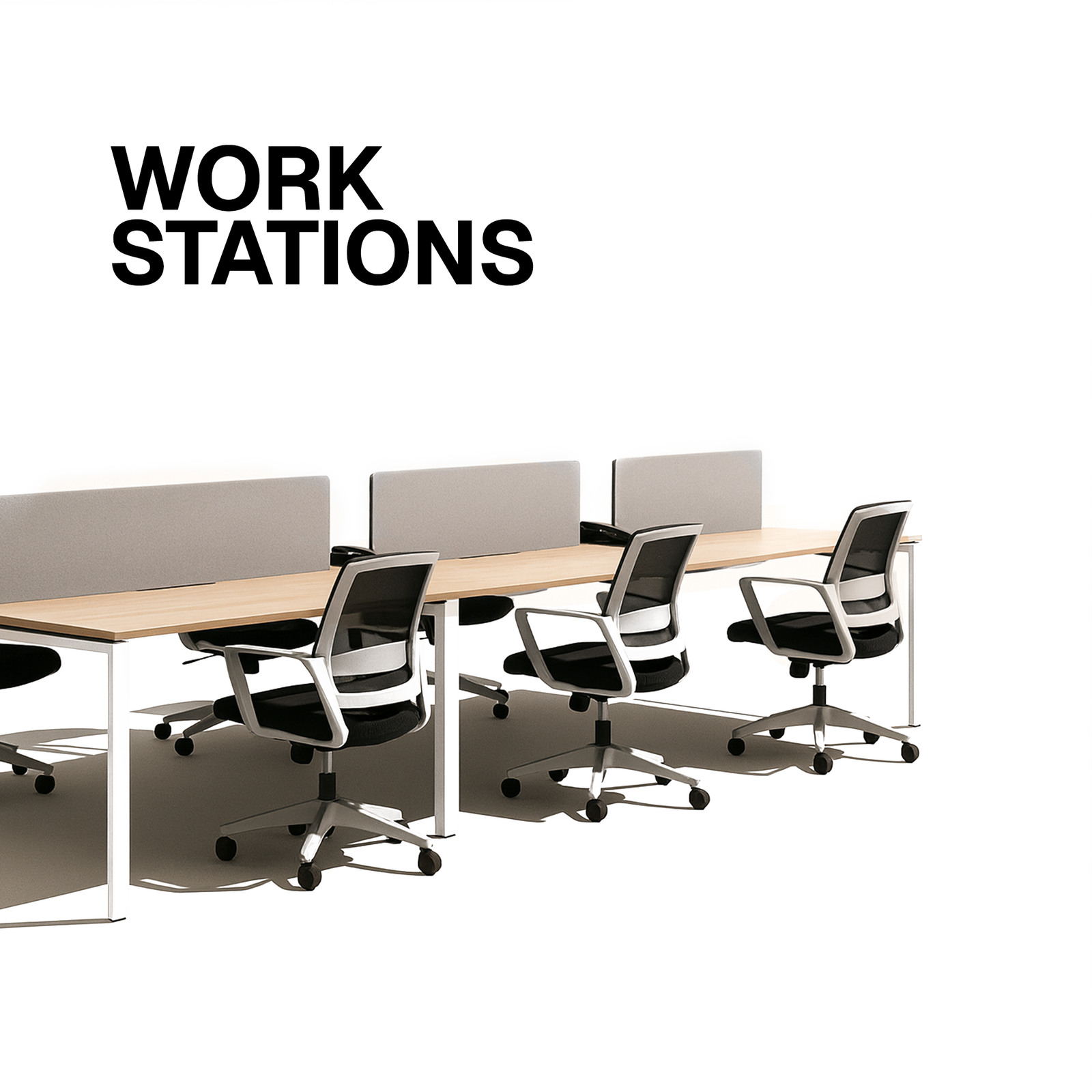
Think of building blocks rather than monolithic desks. Modular furniture—stackable cubes, mobile workstations, and panel walls that lock into a 60 cm or 120 cm grid—lets you snap pieces together in predictable patterns.
How to implement
1. Audit your current inventory: Identify any non‑modular items (e.g., fixed‑height executive desks) and earmark them for replacement.
2. Choose a grid size: 60 cm works well for compact coworking spaces; 120 cm suits larger open‑plan offices.
3. Purchase a “core kit”: A set of base modules (desk tops, legs, casters, and connectors) that can be mixed‑and‑matched for any layout.
Quick win
A modular desk with casters and a quick‑release locking mechanism can be turned 180° and relocated in under 30 seconds, freeing up floor space instantly.
Trick 2 – Invest in High‑Quality, Lock‑Free Casters
Why casters matter
The right wheels are the unsung heroes of rapid reconfiguration. Low‑profile, lock‑free casters glide smoothly on carpet, hardwood, or polished concrete, and they swivel 360° for precise positioning.
Selecting the perfect caster
Feature Recommendation
Load capacity Minimum 150 lb (68 kg) per caster; 4‑caster desks = 600 lb total.
Brake type Lock‑free for speed, but keep a hand‑brake on at least one wheel for safety during static setups.
Wheel material Polyurethane for carpet, rubber for hard floors to avoid scratches.
Swivel vs. fixed Swivel for maneuverability; fixed for linear moves (e.g., along a corridor).
Installation tip
Mount the casters on a metal plate (often included with the caster) and use self‑tapping screws that bite into the desk frame. This avoids the need for bolts or nuts that can loosen over time.
Trick 3 – Create a “Reconfiguration Blueprint” Library
The concept
Instead of improvising each time, develop a set of pre‑drawn floor‑plan templates (PDF or AutoCAD) that correspond to common scenarios:
Pod‑Mode – small groups of 4‑6 desks facing each other.
Focus‑Zone – isolated desks with acoustic panels.
Collaboration‑Island – a central table surrounded by movable chairs.
Event‑Layout – open space for presentations or product demos.
How to use them
1. Digitally tag each furniture piece (e.g., D‑01‑C‑A for Desk 01, Corner A).
2. Overlay the blueprint on a tablet and walk the space, “checking off” each item as you place it.
3. Time‑track each layout to build a database of average reconfiguration duration.
Bonus
Upload the blueprints to a cloud folder (Google Drive, SharePoint) and give the facilities team edit rights. Everyone can pull the latest version, ensuring consistency across locations.
Trick 4 – Employ Quick‑Release Fasteners for Semi‑Permanent Fixtures
What are they?
Fasteners such as cam‑lock bolts, quarter‑turn connectors, and magnetic latch brackets allow you to attach panels, shelving, or desk extensions without a wrench or screwdriver.
Real‑world example
A conference table with a detachable leaf uses a cam‑lock system: rotate the handle ¼ turn, and the leaf slides in or out in seconds.
Implementation steps
1. Identify fixtures that change often (e.g., whiteboard panels, privacy screens).
2. Replace standard screws with cam‑locks or magnetic brackets.
3. Train staff on the simple rotation or pull motion; it takes less than a minute to learn.
Safety note
Even quick‑release hardware should have a secondary lock (a small set‑screw) if the piece will stay in place for more than 24 hours. This prevents accidental disengagement during high‑traffic periods.
Trick 5 – Label Everything with QR‑Enabled Tags
The power of QR codes
Attach a small QR sticker to the underside of each desk, chair, and panel. Scanning the code reveals:
Item ID (for inventory)
Weight & load capacity
Suggested placement (e.g., “Ideal for pod‑mode, near window”)
Maintenance notes (e.g., “Check caster lubrication quarterly”)
Benefits
Speed – No need to flip a spreadsheet; a quick scan on a phone pulls up all relevant data.
Accuracy – Reduces the risk of placing a heavy filing cabinet on a floor that can’t support it.
Analytics – Over time, you can see which items are moved most often and decide whether to retire or replace them.
Quick tip
Use a free QR‑generator (like QR Code Monkey) and link to a Google Sheet that updates automatically via Apps Script. This makes the system self‑maintaining.
Trick 6 – Use “Rolling Staging Areas” for Bulk Moves
The problem
When you have to relocate an entire floor’s worth of furniture, moving each item individually creates traffic bottlenecks and increases the chance of bumps and scratches.
Solution
Set up rolling staging carts—heavy‑duty platforms on industrial casters (think 200 kg capacity). Load a set of desks, chairs, and accessories onto the cart, then roll the whole block to the new location.
How to build one
Component Typical Specs
Base platform 1 m × 2 m steel frame with perforated steel sheet (for weight distribution).
Casters 4‑inch swivel casters, lock‑free, with brake on one wheel.
Side rails Adjustable metal straps to secure furniture during transit.
Handles Fold‑out ergonomic handles for easy maneuvering.
Execution
1. Load 3‑4 desks plus accompanying chairs onto the cart.
2. Secure using the side rails; a quick “click” keeps everything in place.
3. Roll to the destination—no need to carry items through hallways.
The result? A 4‑person move crew can relocate an entire zone in under 15 minutes, compared to 45‑60 minutes using traditional hand‑carrying.
Trick 7 – Adopt a “One‑Touch” Power & Data Solution
Why it matters
A reconfigured desk isn’t useful if you have to run separate power cords and Ethernet cables every time.
The one‑touch system
Power: Use floor‑mounted power strips with plug‑and‑play modules that snap onto the desk leg or underneath the tabletop.
Data: Install cat‑6 patch panels in the ceiling grid with quick‑release keystone jacks that slide onto a desk‑mounted “data hub” (a small, wall‑mounted patch panel).
Quick‑install kit example
Item Description
Power hub 6‑outlet, surge‑protected strip with a magnetic base that attaches to the underside of the desk.
Data hub 4‑port keystone module with snap‑in RJ45 connectors; cables run up through the floor to the ceiling.
Cable management Velcro‑wraps and magnetic cable trays to keep cords tidy while moving.
Benefits
Zero‑rewiring each time you move a desk.
Safety—no stray cords tripping staff.
Professional look—clean surfaces, no tangled cables.
Trick 8 – Leverage “Flex‑Walls” and Portable Acoustic Panels
The challenge
Acoustic quality often suffers after a quick layout change because permanent walls can’t adapt to new zones.
The flex‑wall solution
Modular glass or fabric panels that slide on a floor‑track system.
Portable acoustic baffles (lightweight fabric‑filled panels with a built‑in stand).
Installation steps
1. Lay a low‑profile track (aluminum or PVC) along the perimeter of the space.
2. Snap panels into the track; they lock with a simple lever.
3. Re‑position panels in seconds to create private “focus booths” or open “collaboration corridors”.
Quick tip
Choose panels with magnetic edges. This allows you to attach a small whiteboard or screen without extra hardware, turning any temporary wall into a functional presentation surface instantly.
Trick 9 – Schedule “Reconfiguration Sprints” with a Clear Timeline
Think sprint, not marathon
Treat each layout change like an agile sprint: a short, time‑boxed effort with a defined “Definition of Done.”
Sprint Element Recommended Practice
Sprint length 30‑45 minutes for a zone (e.g., 10 desks).
Kick‑off 5‑minute briefing: review blueprint, assign roles (Mover, Connector, Safety).
Execution Follow a “Move‑First‑Secure‑Last” checklist (move items, plug power/data, lock casters).
Retrospective 5‑minute post‑move debrief: what went well, what to improve.
Role‑based checklist
Role Key Tasks
Mover Physically relocate furniture, verify casters are locked after placement.
Connector Plug in power/data hubs, scan QR tags for verification.
Safety Officer Ensure clear pathways, confirm no tripping hazards, perform a quick visual inspection.
By codifying the process, you eliminate “guesswork” and enable even new staff to participate confidently.
Trick 10 – Maintain a “Rapid‑Refresh” Toolkit on Site
What belongs in the toolkit?
Item Quantity (per 100 sq m) Why it matters
Adjustable wrench 1 Tightening quick‑release bolts.
Allen key set (1–6 mm) 1 For modular connector screws.
Portable level 1 Ensuring desks are perfectly horizontal.
Furniture‑friendly floor protectors 5‑10 Prevent scratches when rolling heavy pieces.
Cable ties & Velcro wraps 20 each Fast cable management.
Label printer with QR stickers 1 For on‑the‑spot tagging of new items.
Mini‑toolkit for acoustic panels 1 Quick‑install brackets, magnetic clips.
Safety gloves & high‑visibility vest 2 each Protect hands, increase visibility during moves.
Storage solution
A rolling lockable toolbox (approx. 60 L) keeps the kit mobile and secure. Place it at the central hub of each floor so the team knows exactly where to grab it.
Putting It All Together: A Sample 30‑Minute Reconfiguration Walkthrough
Let’s illustrate how the ten tricks combine in a real‑world scenario:
1. Preparation (5 min)
Open the “Collaboration‑Island” blueprint on a tablet.
Scan the QR codes of the three desks you’ll be moving to confirm load capacity.
2. Gather Tools (2 min)
Pull the Rapid‑Refresh Toolkit from the rolling toolbox.
Attach the portable power/data hubs to each desk’s underside.
3. Move Furniture (8 min)
Roll each desk onto a rolling staging cart (Trick 6).
Use lock‑free casters to glide desks into the new spot.
4. Secure & Connect (8 min)
Engage quick‑release fasteners for the new modular wall panel (Trick 4).
Plug power hubs into floor‑mounted strips and snap data cables into the ceiling patch panel (Trick 7).
5. Finalize (4 min)
Add acoustic baffles for sound‑privacy (Trick 8).
Perform a rapid safety check and lock the casters.
6. Retrospective (3 min)
Note any hiccups in the sprint log, update the blueprint if needed.
Result: A fully functional, aesthetically cohesive collaboration island ready for a client workshop in under 30 minutes—without calling in external movers.
Bonus Tips & Best Practices
Tip How It Helps
Standardize desk heights (e.g., 73 cm) Guarantees ergonomic consistency across configurations.
Color‑code furniture (e.g., blue for pod‑mode, green for focus‑zone) Visual cue for quick identification during moves.
Keep a “spare parts” drawer (extra casters, connectors) Reduces downtime when a component fails.
Use “soft‑close” furniture (drawers with dampened mechanisms) Minimizes noise during reconfiguration in open spaces.
Document “no‑move” zones (e.g., near fire exits) Keeps compliance with safety codes.
Run a quarterly “reconfiguration drill” Keeps the team sharp and identifies process gaps before a real event.
Leverage software like OfficeSpace, SpaceIQ, or Miro for collaborative layout planning. Enables remote stakeholders to visualize and approve changes in real time.
The Bottom Line
Rapid office furniture reconfigurations aren’t a matter of luck; they’re a disciplined blend of smart hardware choices, clear processes, and a dash of digital savvy. By adopting modular systems, lock‑free casters, quick‑release fasteners, QR‑enabled labeling, and a sprint‑style workflow, you empower your team to reshape the workspace in minutes—not hours.
Takeaway: Start small. Pick one or two tricks that align with your current furniture inventory, test them on a single zone, and iterate. Within a few weeks you’ll have a repeatable, scalable system that keeps your office as dynamic as the ideas it houses.
Ready to Speed‑Shift Your Space?
1. Audit your current furniture for modularity and caster quality.
2. Create a simple QR‑tagging spreadsheet and print stickers.
3. Build a rolling staging cart using the parts list above.
4. Pilot the “Collaboration‑Island” sprint in a low‑traffic area.
Share your results in the comments—let’s build a community of fast‑moving workplaces!
Happy reconfiguring!